
Wood Bowl Finishes Explained: Tung Oil, Rubio Monocoat, Osmo, and More
The finish on a wood bowl does two things: it protects the wood and it determines how the wood looks and feels. Get both of those things right and the piece will age gracefully for decades. Get them wrong and you end up with something that either feels like plastic or shows wear within a year.
Here’s a plain-language breakdown of the finishes I use most, what they actually do, and how to think about the question most buyers ask first.
”Is it food safe?”
Almost every buyer asks this, and it’s a reasonable question — especially if you’re planning to use a bowl for fruit, bread, or salad.
The honest answer is that most wood finishes are food safe once fully cured. The concern with wood finishes isn’t the cured film — it’s the solvents and carriers that evaporate during drying. Those off-gas during the curing period, and once curing is complete, they’re gone. A bowl that was finished two weeks ago and has had time to fully cure is almost certainly safe for incidental food contact.
The exceptions worth knowing about:
- Film finishes (lacquer, polyurethane, varnish) can chip and flake over time, which means small particles of finish could enter food. These are better suited to decorative pieces.
- Oil finishes that use petroleum-based dryers (some linseed oils) are more complicated — the dryers themselves can be problematic if not fully cured.
- Raw linseed oil and raw tung oil take weeks to months to fully cure and can go rancid inside the wood. Neither belongs on a functional bowl.
The finishes below are all ones I’ve chosen specifically because they perform well on functional pieces and have good food-contact track records when cured.
Penetrating Oils
These finishes soak into the wood fiber rather than building a film on the surface. They’re the most “natural” feeling category — the wood still feels like wood rather than like a coated surface.
Polymerized Tung Oil
This is my go-to for spalted and high-figure work, and I’ve written about why I prefer it for spalted maple and birch in detail.
Pure tung oil comes from the nut of the tung tree and is non-toxic when cured. The “polymerized” version is heat-treated to dramatically accelerate drying — instead of weeks, you’re looking at 24 hours between coats. Three to four thin coats builds a soft, satin sheen that enhances the depth and figure of the wood without sitting on top of it.
The result feels warm and slightly tactile rather than glassy. It’s exactly what you want on a piece where the grain is the point.
Best for: Spalted wood, high-contrast pieces, anything where you want the wood to feel like wood.
Food contact: Yes, when fully cured (typically 5–7 days after final coat).
Brand I use: Sutherland Welles Polymerized Tung Oil
Tried & True Varnish Oil
Tried & True makes a line of finishes based on polymerized linseed oil rather than tung oil. Their Varnish Oil is a blend of polymerized oil and natural resin that builds a slightly more durable surface than pure tung oil while retaining a penetrating quality. It cures hard, has no solvents, and is certified food safe.
I used this on my ambrosia maple bowl — it brought out the warm amber tones in the maple’s streaking beautifully and built a silky, even surface across the varied figure.
Best for: Cherry, maple, and other tight-grain species where you want a natural look with slightly more build than tung oil alone.
Food contact: Yes — specifically formulated and certified.
Hardwax Oils
Hardwax oils are a category of finish that combines penetrating oils with hard waxes (typically carnauba and/or synthetic waxes). They penetrate like an oil but cure harder and more durably than a pure oil finish. The result is a finish that’s more resistant to water and wear than straight oil, without building a thick surface film.
Rubio Monocoat
Rubio Monocoat is a single-coat hardwax oil that bonds with wood fiber through a chemical reaction (rather than just drying through oxidation). It’s called “monocoat” because one proper application is genuinely sufficient — there’s no benefit to adding more coats, which actually sets it apart from most other finishes.
The finish line includes a full range of pigmented options, and that’s where it gets interesting for turning. Rubio Black on ash is unlike anything I’ve achieved with other finishes — it’s not “painted black,” it’s ash that has absorbed a deep, architectural black pigment into its open pores while the grain texture remains fully visible. On the Ash Bowl, I used Rubio Black on the exterior and Rubio Pure (the natural, unpigmented version) on the interior — requiring careful masking and sequential application, but producing a contrast that feels intentional in a way few other approaches can.
Best for: Ash, oak, and other open-grain species where you want color or a natural hardwax finish.
Food contact: Rubio Monocoat Pure is food-safe certified. Pigmented versions (like Black) are intended for decorative use.
Osmo PolyX
Osmo is a German hardwax oil that’s more widely available than Rubio and has a longer track record in flooring and furniture. PolyX is their primary product — a clear hardwax oil that produces a satin finish with good durability and water resistance.
I used Osmo PolyX Satin on my Cedar and Resin Art Bowl and on the Natural Edge Cedar Bowl. Cedar is a tricky finishing species — the oils in the wood can interfere with some finishes — but Osmo handles it well and produces a consistent, even surface without blotchiness.
Best for: Cedar, softwoods, and any situation where you want reliable, durable protection with a natural appearance.
Food contact: Osmo lists PolyX as food safe when cured.
Film Finishes
Film finishes build up on the surface of the wood rather than penetrating it. They provide a harder, more water-resistant surface than penetrating oils but change the feel of the piece more significantly — you’re touching the finish rather than the wood.
Waterlox
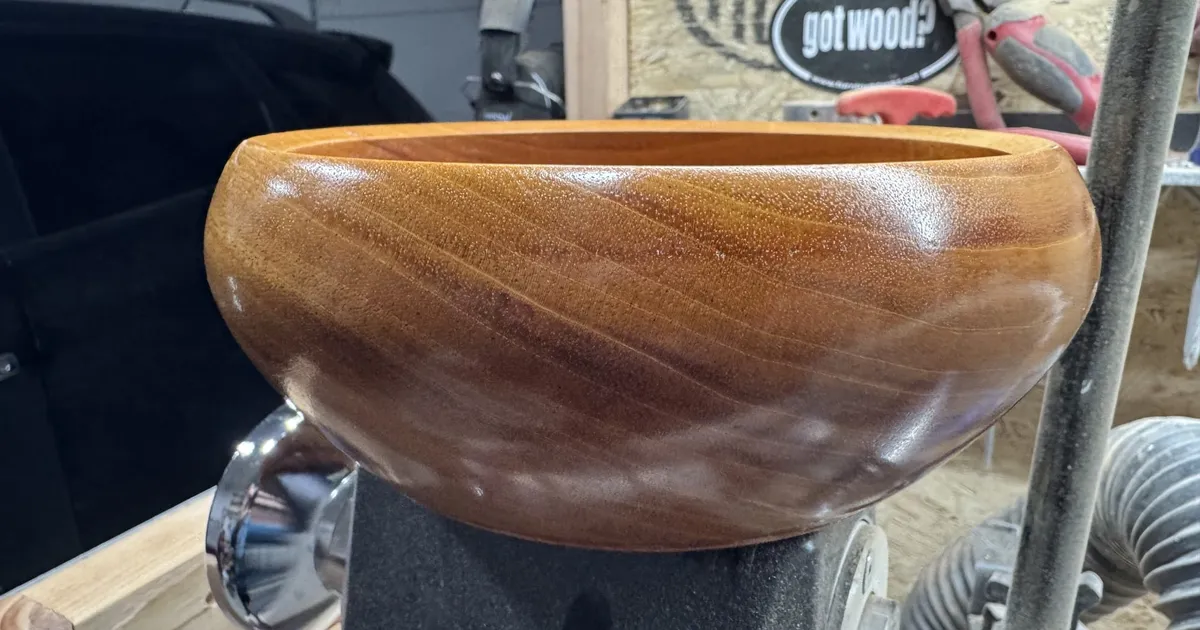
Waterlox is a tung-oil-based resin varnish that penetrates on the first coat and builds a protective film with subsequent coats. It produces a warmer, more amber tone than water-based finishes and is a popular choice for cutting boards and butcher blocks. I used it on my Cherry Wood Bowl — it brought out the pink in the fresh cherry and provided a durable seal.
Best for: Functional pieces that will see regular handling and moisture.
Food contact: Yes, when fully cured (Waterlox Original).
What to Ask About When Buying
If you’re buying a handcrafted wood piece and want to understand what you have:
Ask what finish was used. A maker who can answer specifically — “three coats of polymerized tung oil, applied 24 hours apart, final coat was two weeks ago” — has thought carefully about the work. Vague answers like “natural finish” deserve a follow-up.
Ask how long since the final coat. Fresh-finished pieces are beautiful, but a bowl that left the shop two days ago hasn’t had time to fully cure. Most oils need a minimum of a week after the final coat before they’re ready for regular use.
Ask about re-finishing. All penetrating oil finishes can be refreshed — a light sanding with fine grit and a new coat of the same oil restores the surface. This is part of what makes oil-finished pieces genuinely sustainable objects. A film finish, when it wears, typically needs to be fully stripped and refinished rather than touched up.
A well-made piece with the right finish, properly maintained, should last decades of daily use.
Interested in a custom piece with similar character?
I take a limited number of commissions each month to ensure every piece receives the attention it deserves. Let's discuss your custom commission