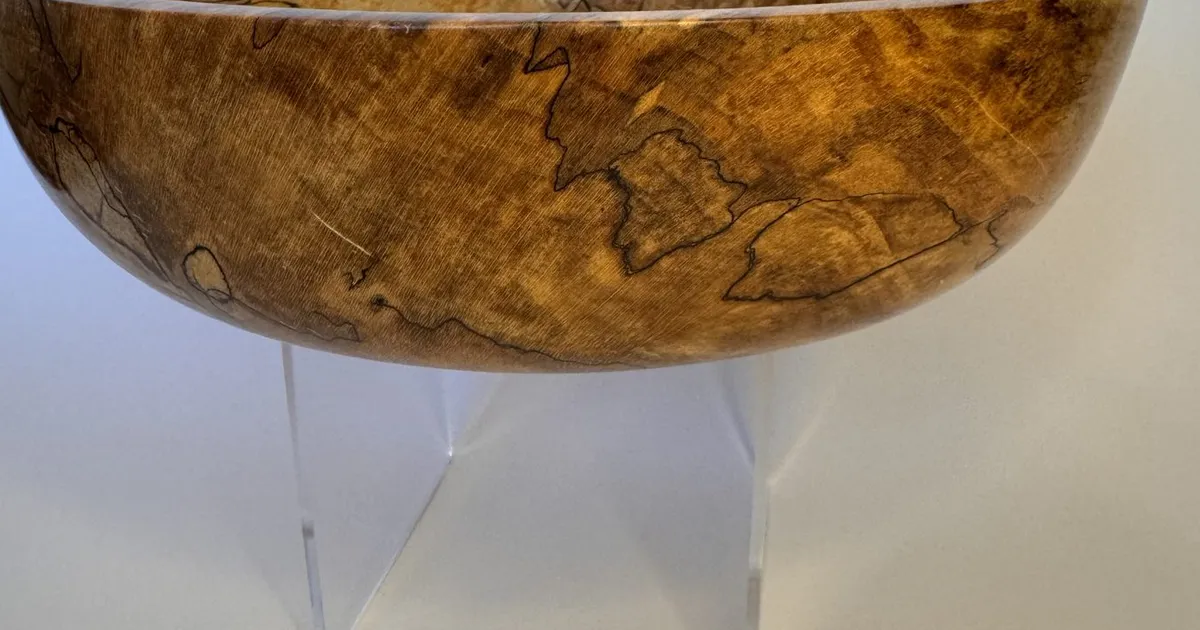
Spalted Maple Bowl — Soft Figure & Natural Character
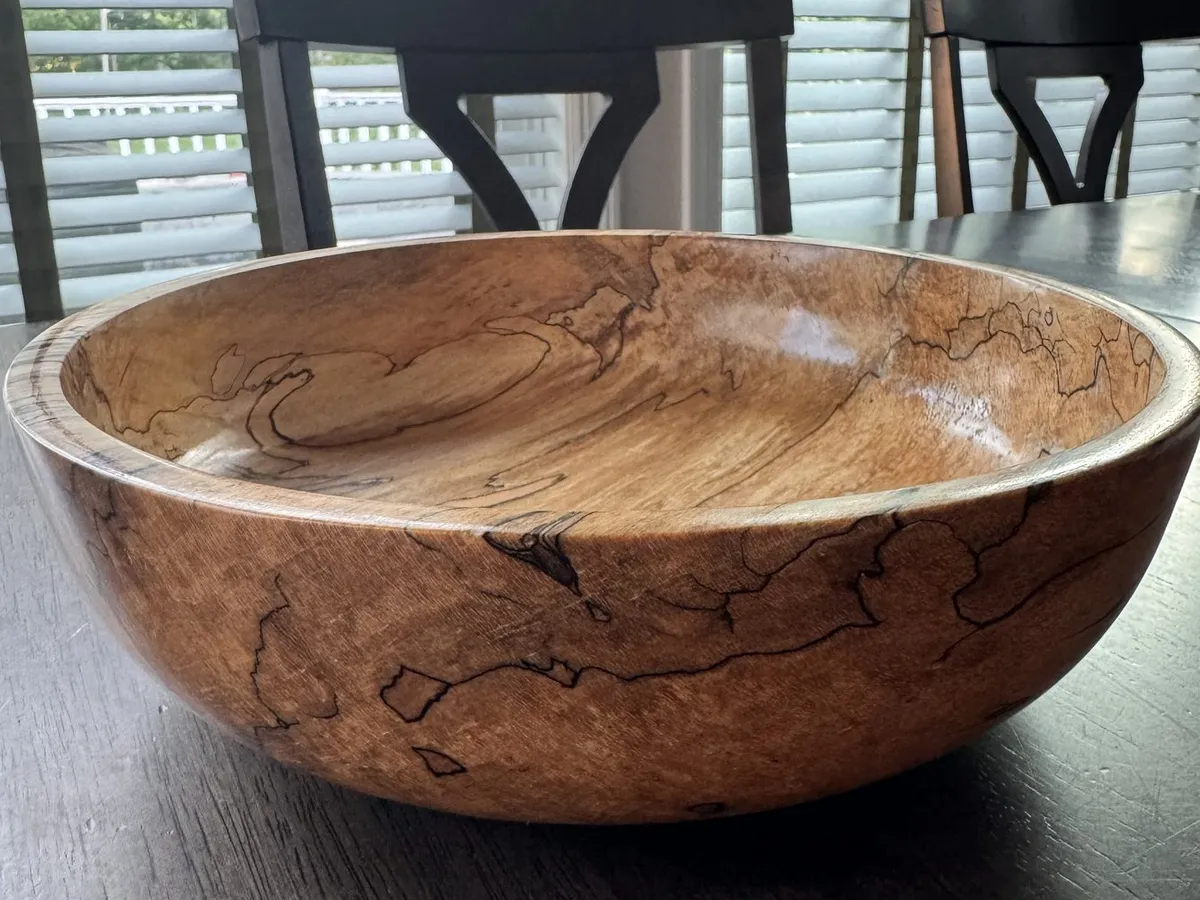
A hand-turned spalted maple bowl with dark natural figure, softer interior character, and a shellac and wax finish.
In the home
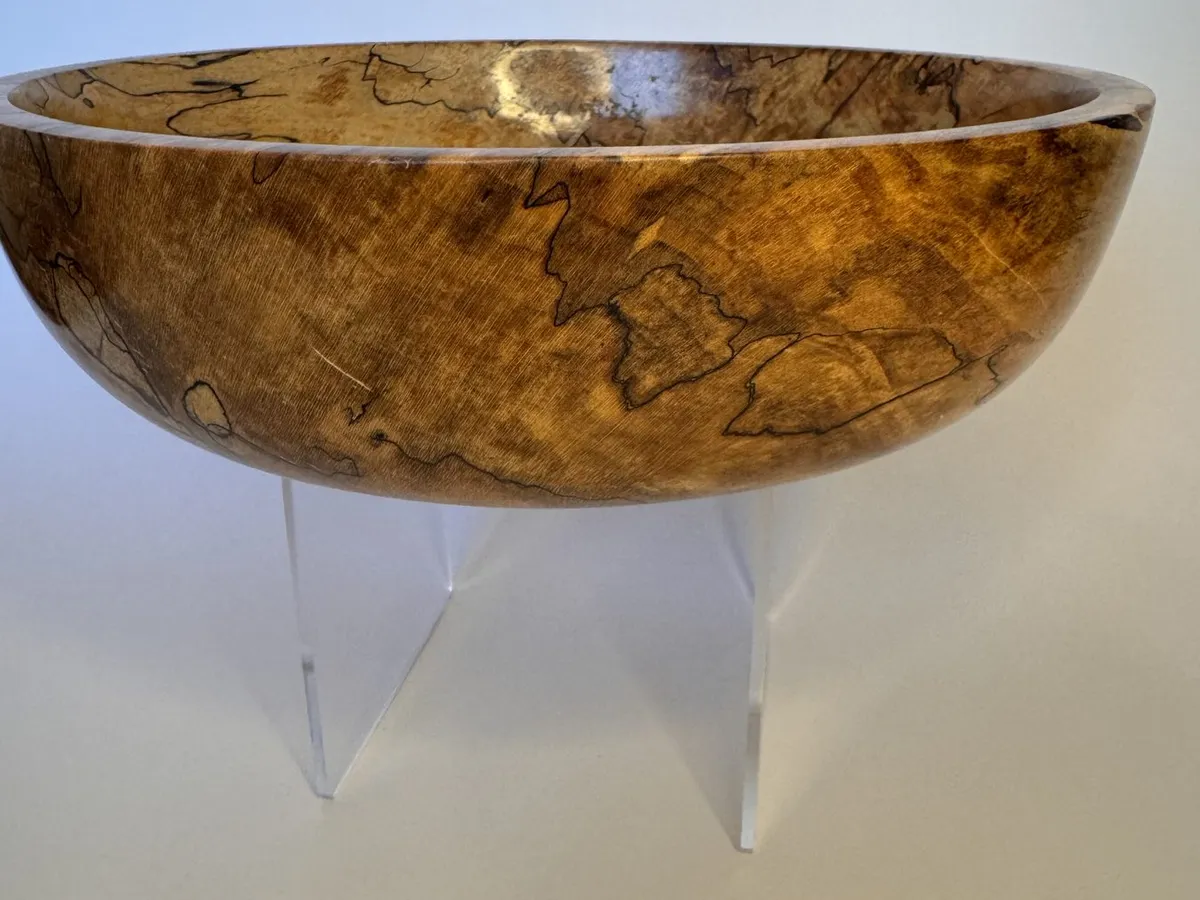
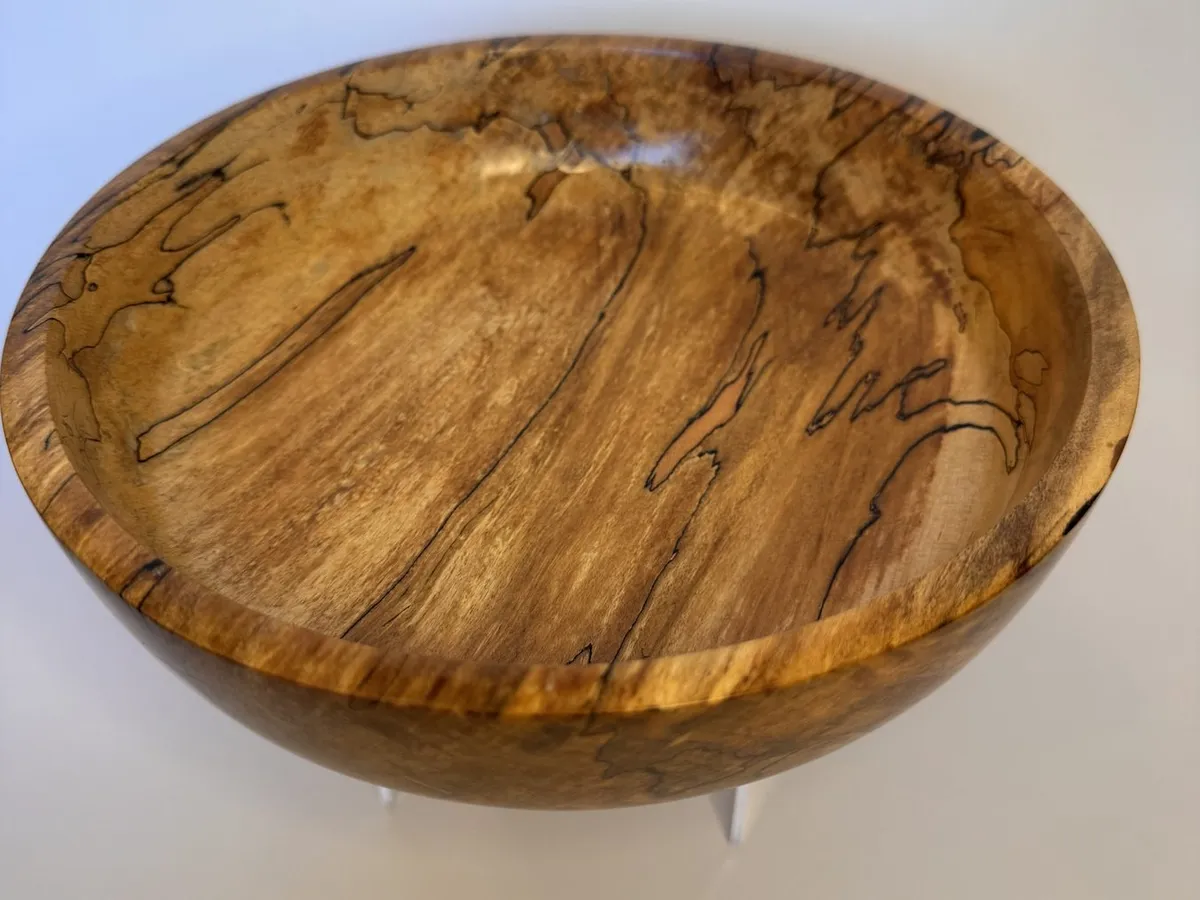
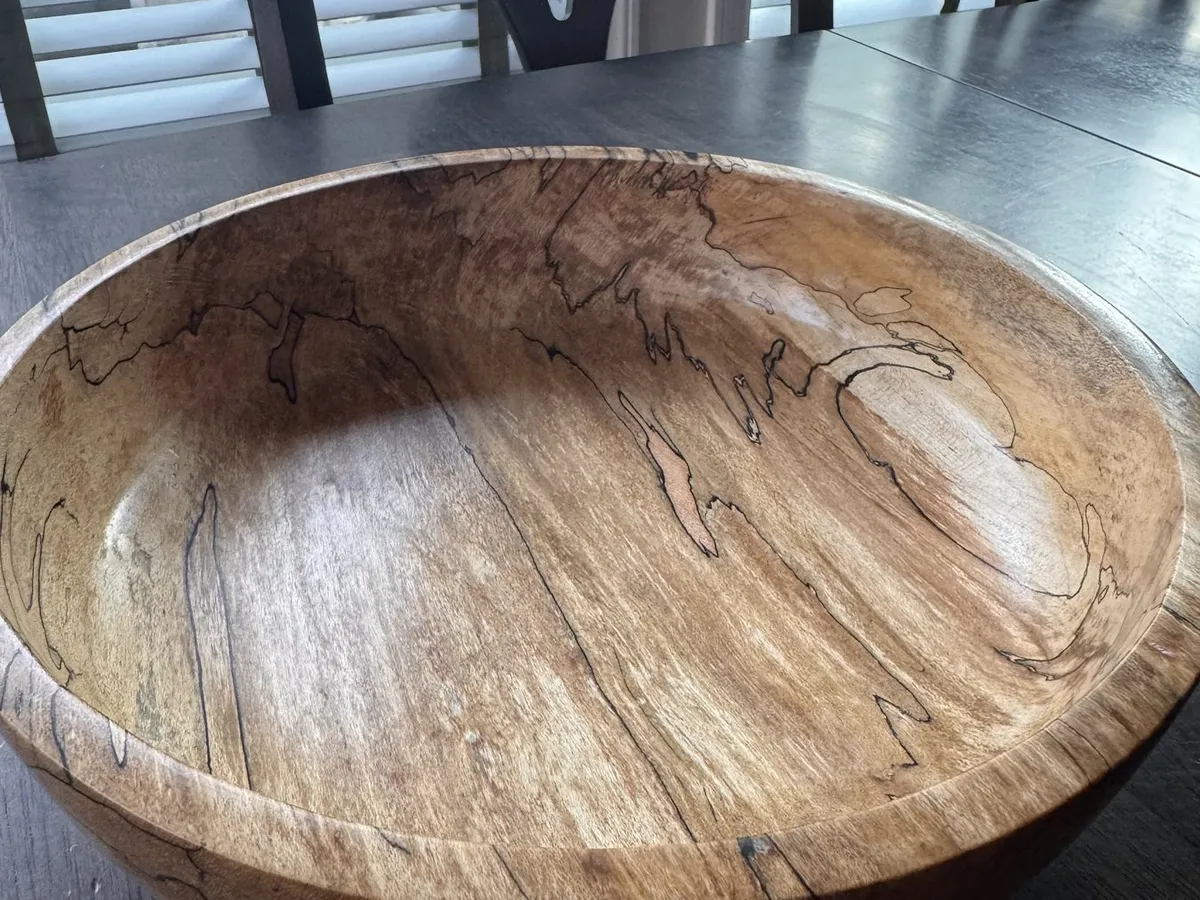
At 9 inches in diameter and 3 inches high, this spalted maple vessel sits comfortably on a coffee table, open shelf, or entryway console. The outer walls carry intense spalting figure, with thin black fungal zone lines tracing unpredictable patterns across warm amber and cream tones.
Designed as a dry decorative piece or catch-all, it holds small everyday items like keys, mail, or pocket keepsakes. Left empty on a low table or bookshelf, its organic spalting pattern reads as a piece of natural sculpture.
Wood, shape, and finish
Spalted wood is created by natural forest decay fungi as a fallen log cures on the damp ground. The resulting black line patterns and color variations make each blank completely one of a kind. Spalted maple varies in density across a single piece, featuring firm heartwood alongside soft punky pockets.
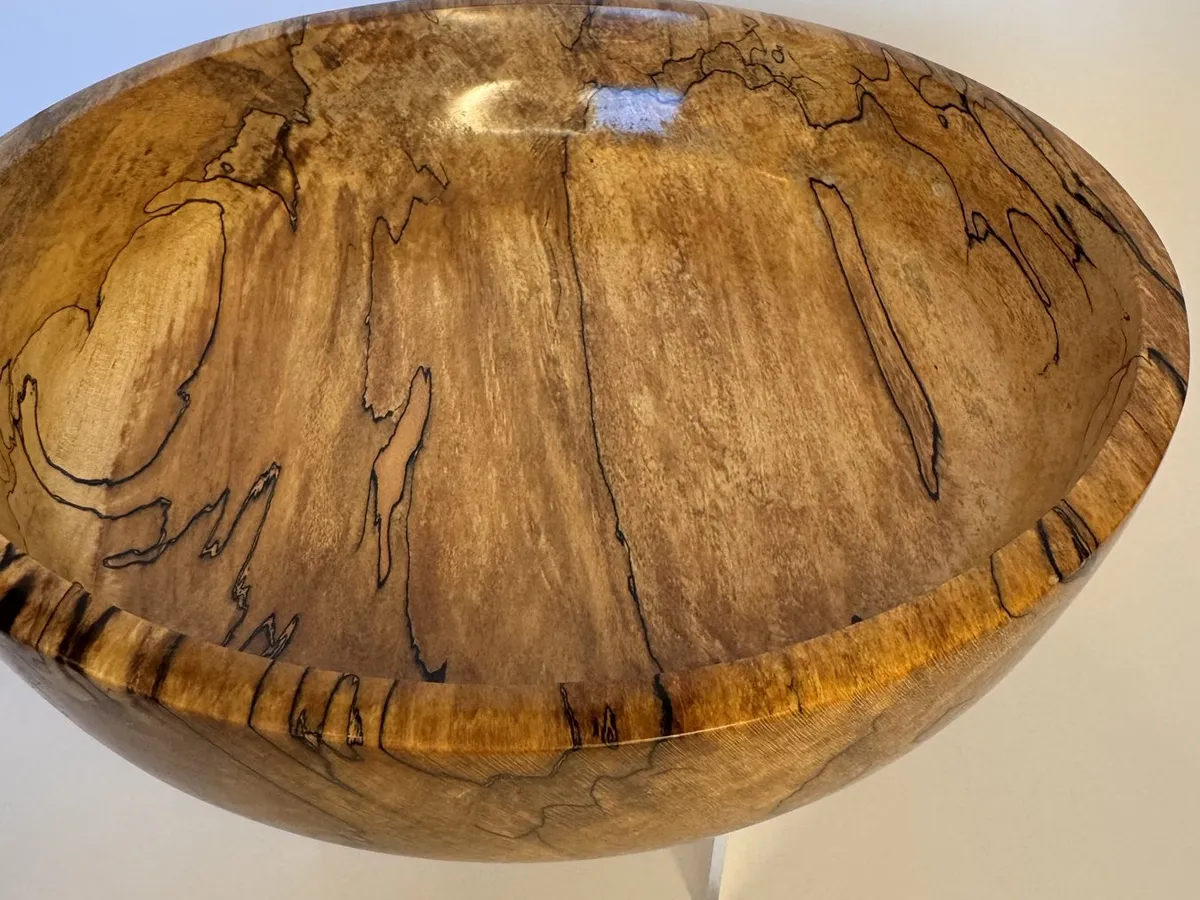
During turning, I chose to preserve the bowl’s full 9-inch diameter and wall proportions rather than over-sanding the interior to chase a perfectly uniform density. The interior retains subtle tactile evidence of the wood’s organic decay—a natural feature authentic to working with wild spalted timber.
The vessel is sealed with de-waxed shellac to harden the porous grain and finished with hand-buffed wax. Shellac locks in the black zone lines while bringing out the warm golden tones of the wood. Care requires simple dusting with a soft cloth or light wiping with a damp cloth; avoid water contact or liquid soaking.
Explore more
- What is Spalted Wood? explains how natural fungi create black zone lines in maple.
- Saturating the Grain: Polymerized Tung Oil for Spalted Wood details techniques for stabilizing spalted timber.
- Wood Bowl Finishes Explained covers shellac, wax, and oil finish applications.
- Browse all spalted maple turning projects to see more spalted wood forms.