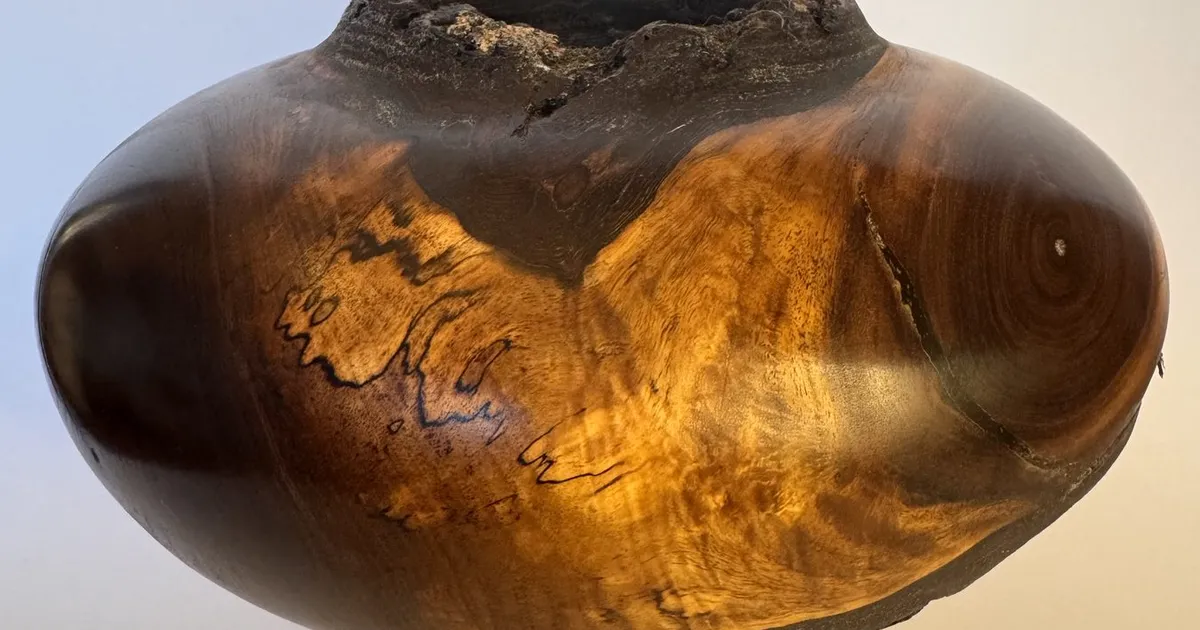
Walnut Hollow Form — Natural Bark & Spalted Sapwood
A hand-turned walnut hollow form with natural bark left in place, spalted sapwood, and a warm tung oil finish.
In the home
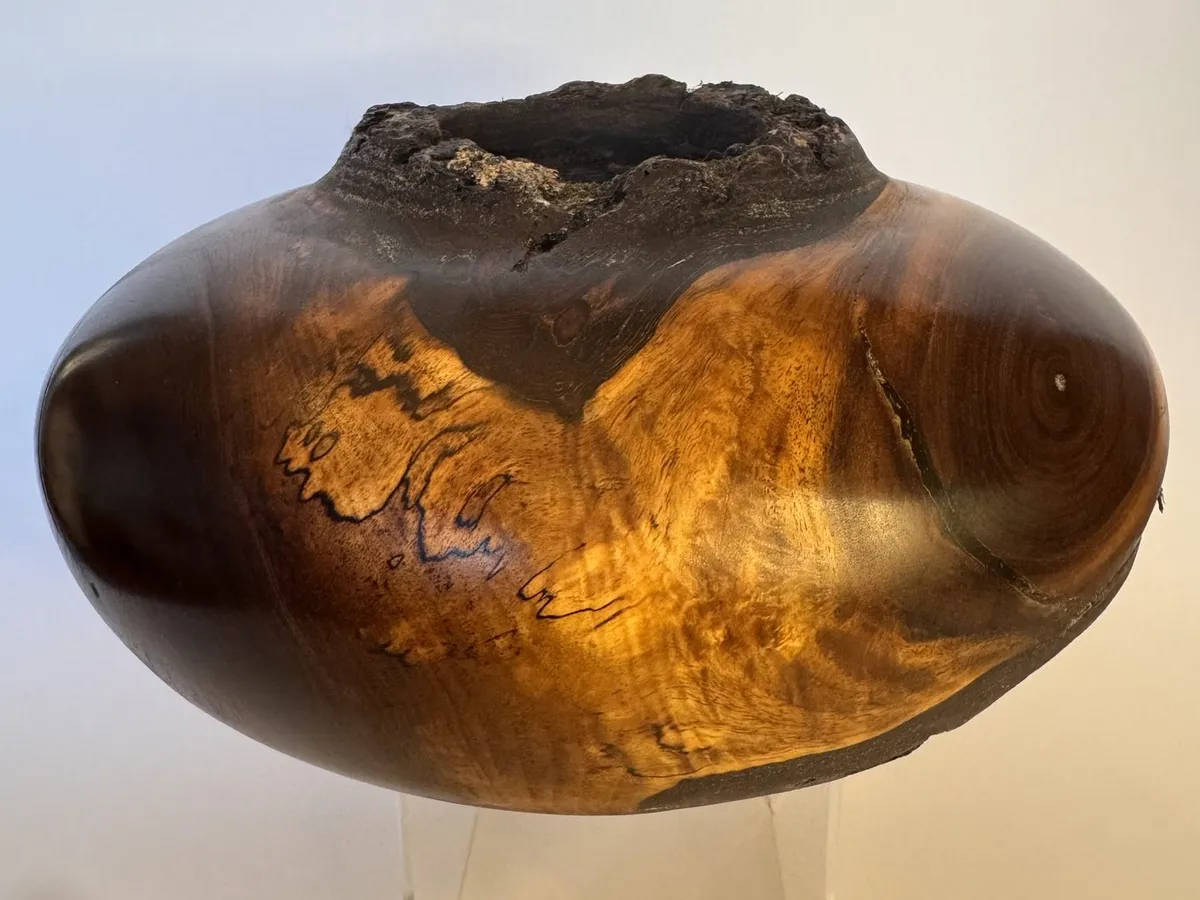
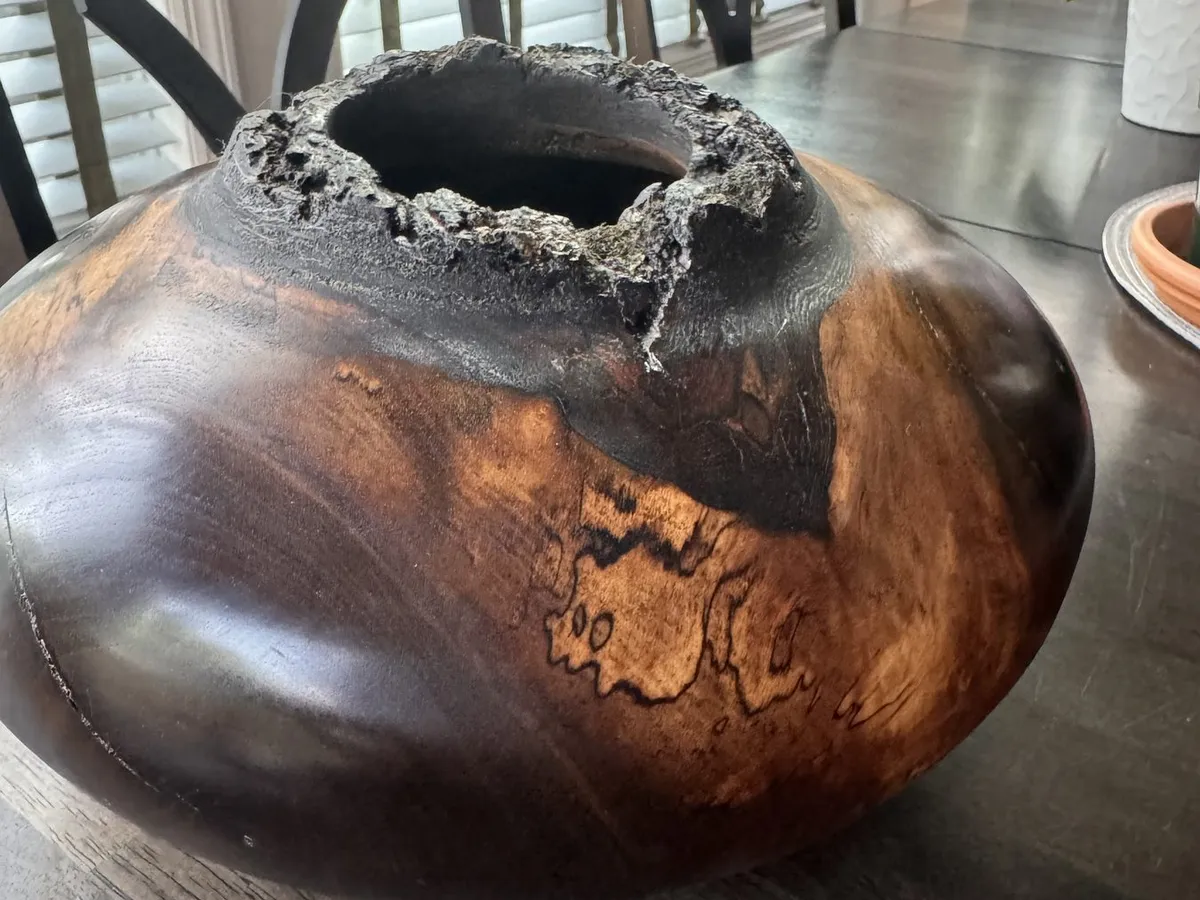
Spanning 11 inches in diameter and standing 6 inches high, this wide hollow form is designed as a standalone piece of wood art. The squat, organic body grounds the piece on a low coffee table, sideboard, or entryway credenza without overpowering nearby decor.
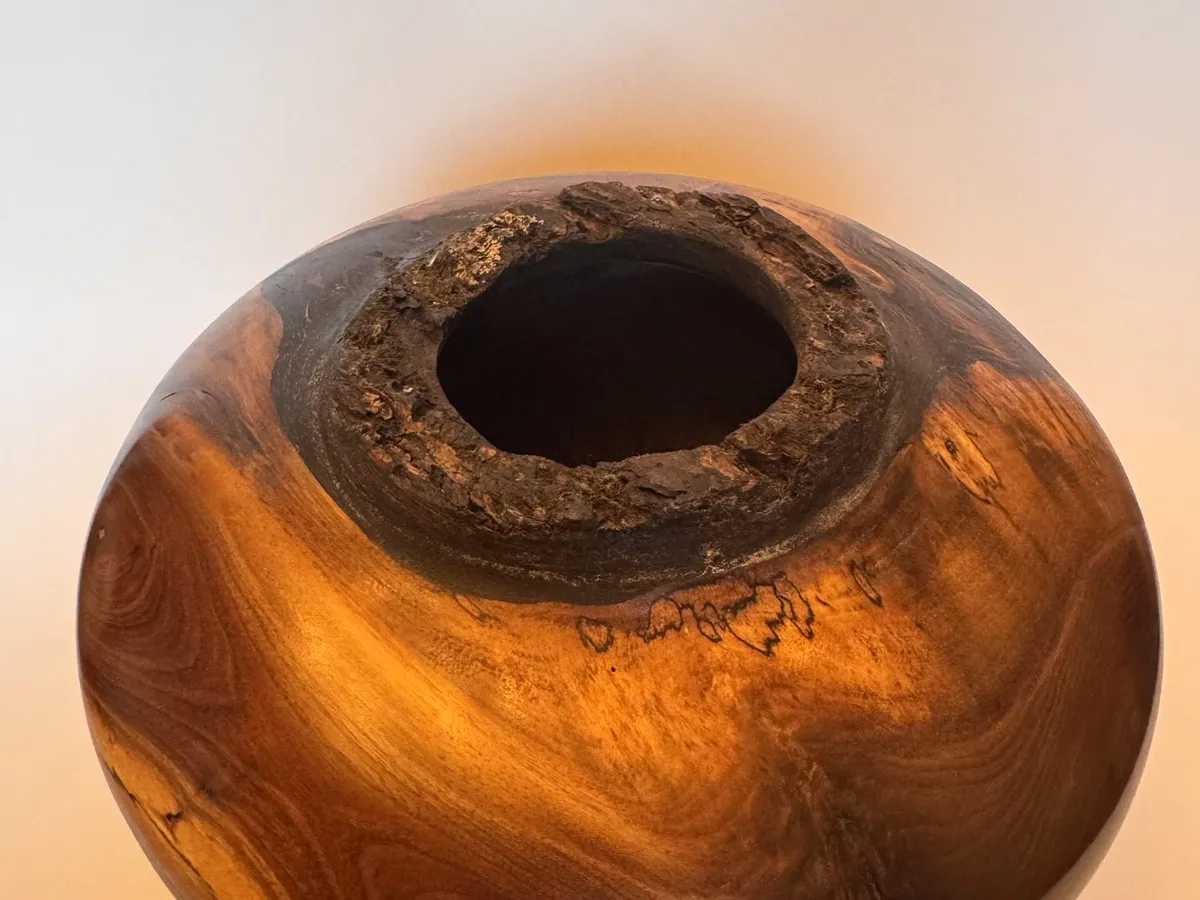
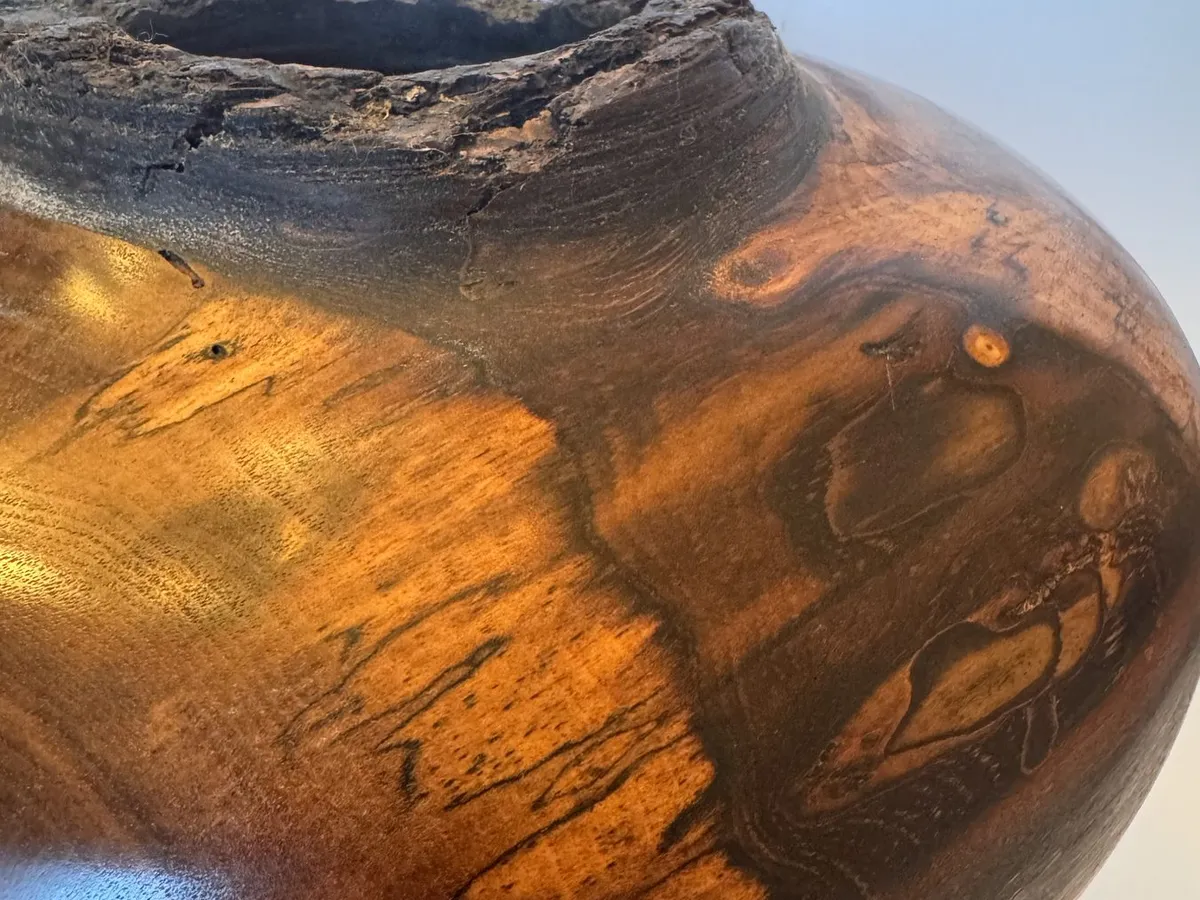
The top opening is intentionally small, dark, and framed by rugged natural log bark. Left empty, the contrast between the dark interior cavity, textured bark rim, and warm polished outer walls makes this vessel a captivating focal point.
Wood, shape, and finish
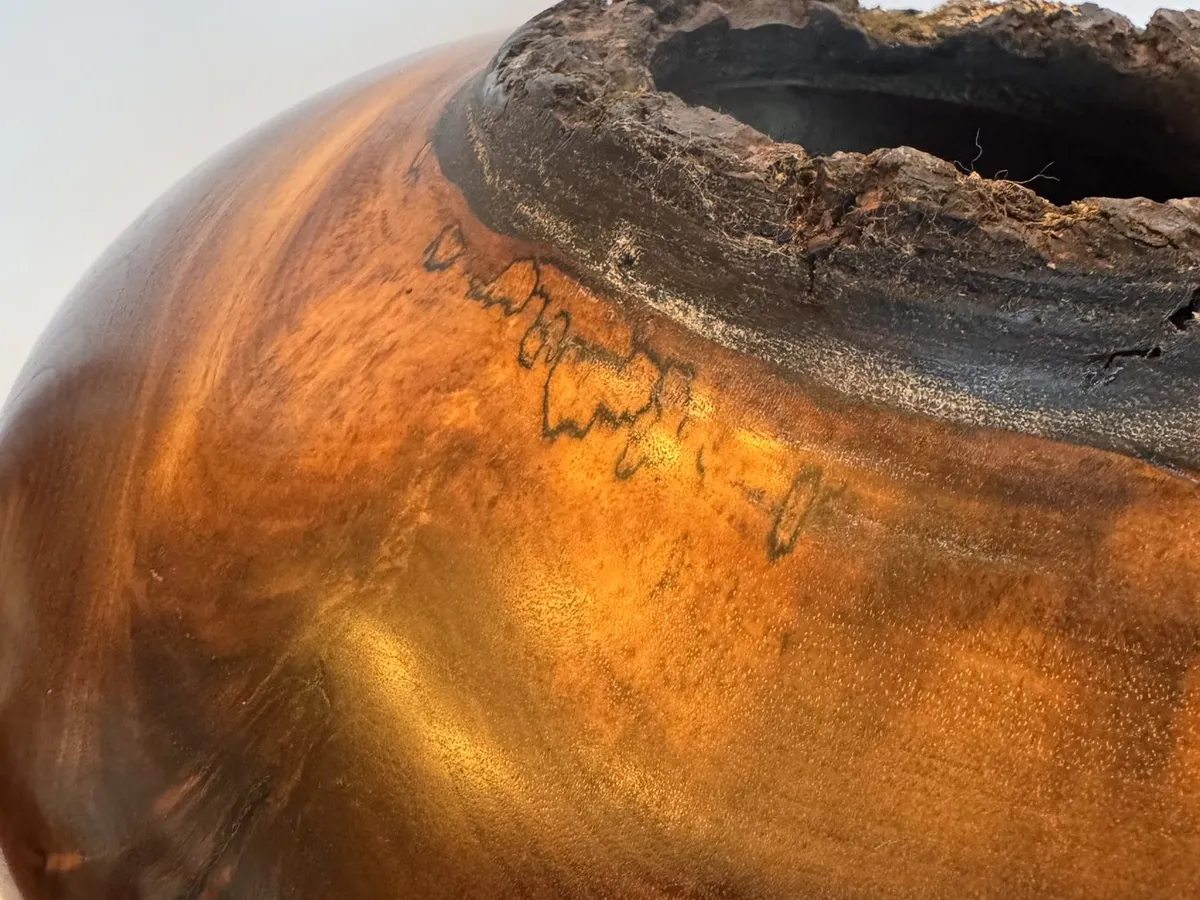
Rather than turning past the log’s natural defects to make a smaller, uniform bowl, I preserved the raw outer bark inclusion and spalted sapwood band. A striking ribbon of golden amber sapwood sweeps across one side of the vessel, contrasting sharply with the deep chocolate heartwood of the walnut.
Blind-hollowing a vessel through a small top opening requires specialized swan-neck hollowing tools and careful wall feel to achieve uniform wall thickness without breaching the side walls. Preserving the delicate bark rim around the mouth required slow lathe speeds and precise tool control.
The form is finished with polymerized tung oil. Tung oil absorbs deep into the wood grain to enrich the natural dark walnut tones while protecting the raw bark rim. It cures into a tactile, low-sheen satin finish that invites touch. For maintenance, dust gently with a soft cloth or wipe lightly with a damp cloth.
Explore more
- Wood Species Guide: Cherry, Maple, Walnut & Ash covers the grain and tonal range of black walnut.
- Wood Bowl Finishes Explained details how polymerized tung oil protects sculptural vessels.
- Browse all walnut turning projects to see more natural edge bowls and hollow forms.